No emissions
Detects drones without transmitting, so it adds no exposed emission source.


The threat · Drone activity around a site that you cannot see or hear?
A receive-only acoustic sensor that detects and localises drone activity without transmitting, adding a passive layer to the counter-UAS stack.
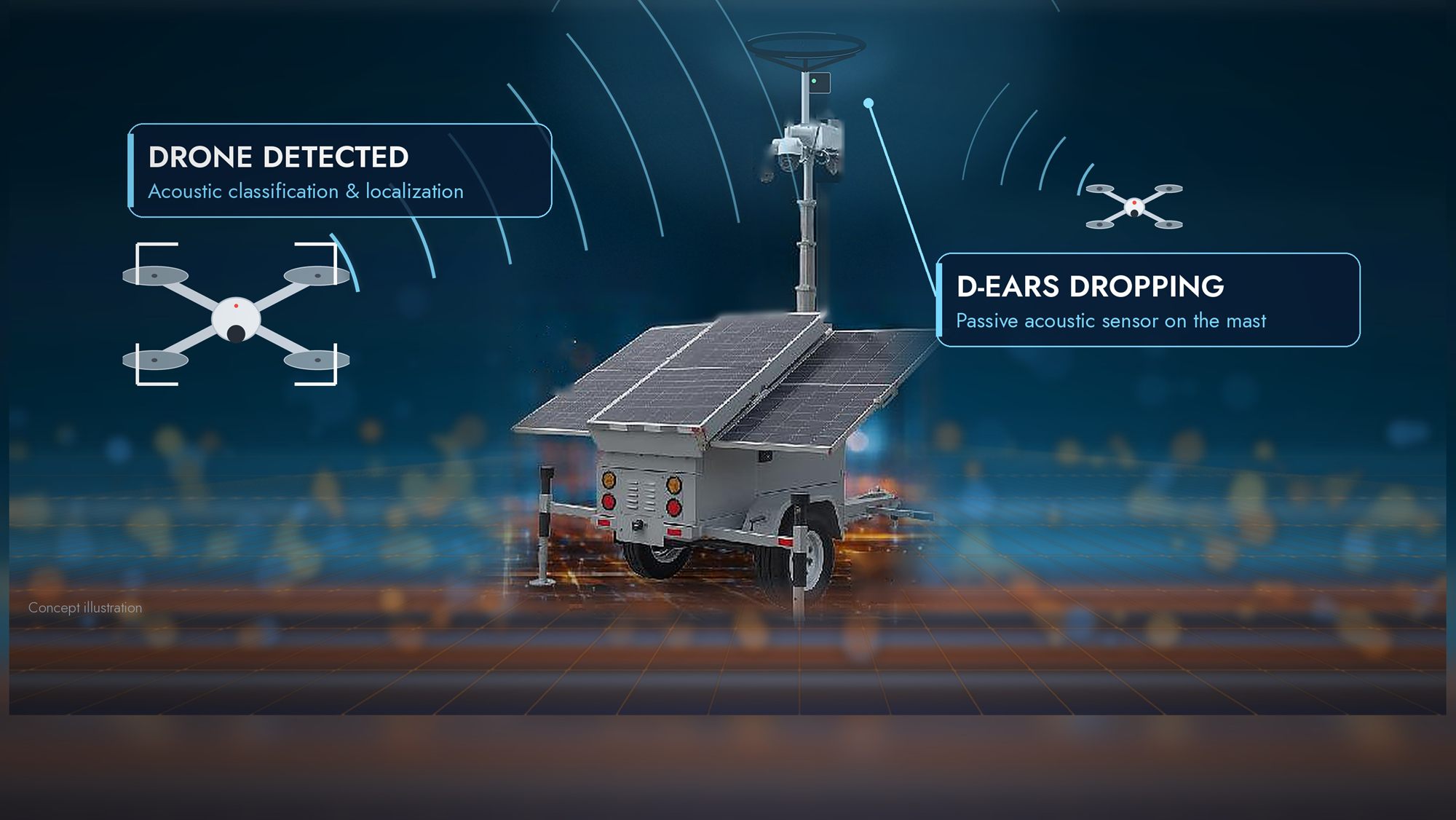
D-EARS DROPPING adds a passive acoustic layer to the counter-UAS stack. It helps detect and localise drone activity without transmitting, supporting faster awareness and a better response in the field.
Detects drones without transmitting, so it adds no exposed emission source.
Complements radar, RF, optics and command-and-control systems.
Standard interfaces and OEM integration into existing systems.
It provides passive drone detection with acoustic classification and localisation, real-time alerts, AI processing on the edge and easy integration through standard interfaces. Built for multi-rotor threats, it is a receive-only sensing layer for existing C-UAS systems, designed to complement radar, RF, optics and command-and-control systems.
Typical deployments include fixed perimeter defence for bases, borders and sensitive facilities, distributed field use across changing terrain, mobile force protection for mounted and dismounted forces, and OEM integration into existing C-UAS, surveillance and C2 systems.
On a tripod, or on a bracket with a 1/4-inch standard mount interface.
Power over Ethernet and RJ45, with LED indicators for power and health.
The microphone array picks up drone activity acoustically, without transmitting.
AI processing on the edge classifies the acoustic signature and localises it.
Real-time alerts help cue the right response in the C-UAS system.
Every image opens full size. Product sheets are shown whole, exactly as D-FENCE publishes them.
Paste it into your specification. It defines the system by performance, so any alternative must meet every point.
The system shall be D-EARS DROPPING by D-FENCE Electronic Fencing and Security Systems Ltd. (ISO 9001:2015 certified quality management), or an approved equivalent that meets every requirement in this section.
A receive-only acoustic sensor that detects and localises drone activity without transmitting, adding a passive layer to the counter-UAS stack.
Before installation, the contractor shall submit the manufacturer's datasheet, the installation instructions and the zone layout for approval.
Tell us the site, the threat and the line. D-FENCE engineers specify the right barrier, sensor and platform, ready for your integrator.
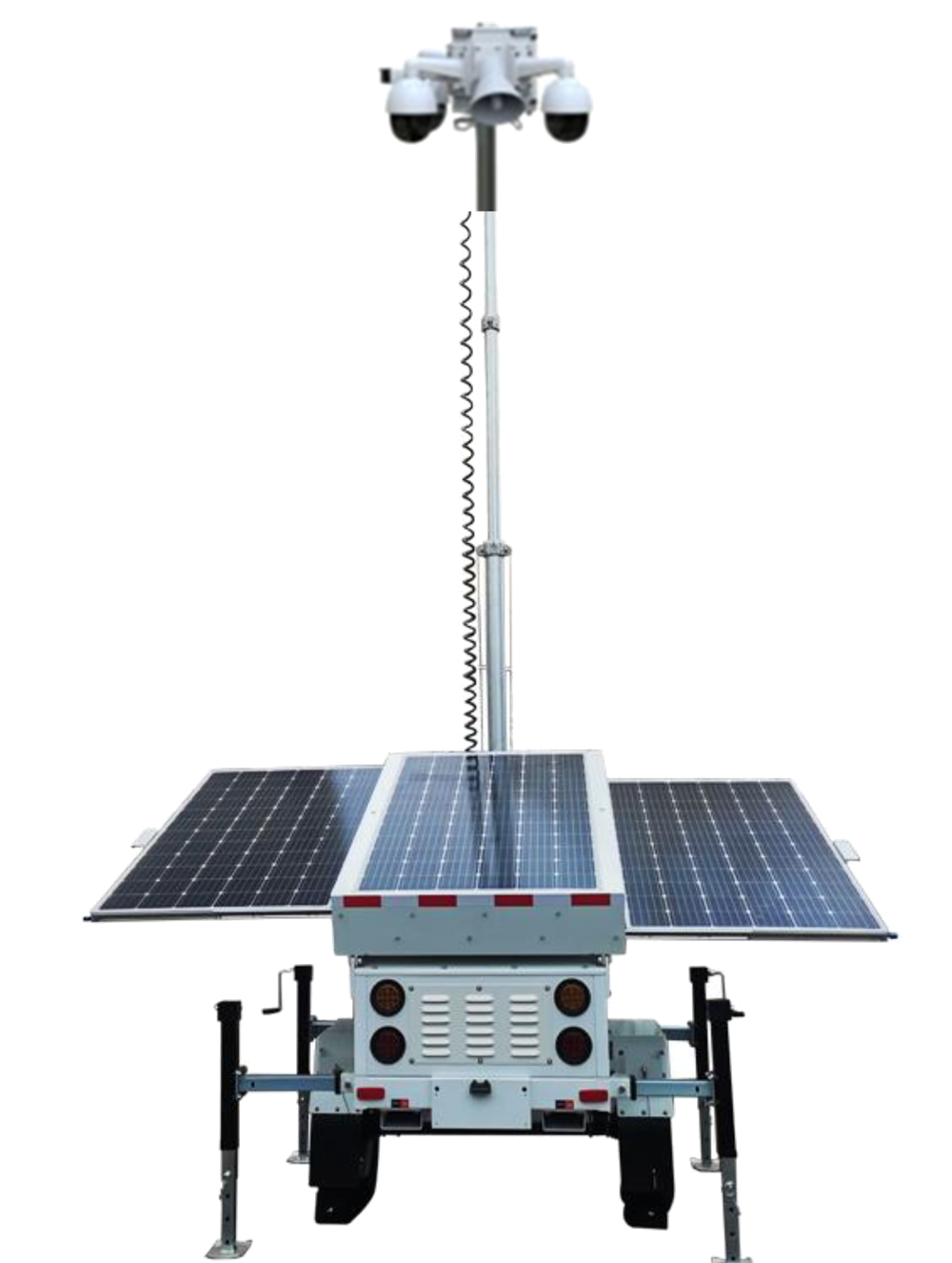
A site with no power, no network and no eyes on it?
An autonomous solar trailer with a telescopic camera mast that puts any site under watch in under 10 minutes.
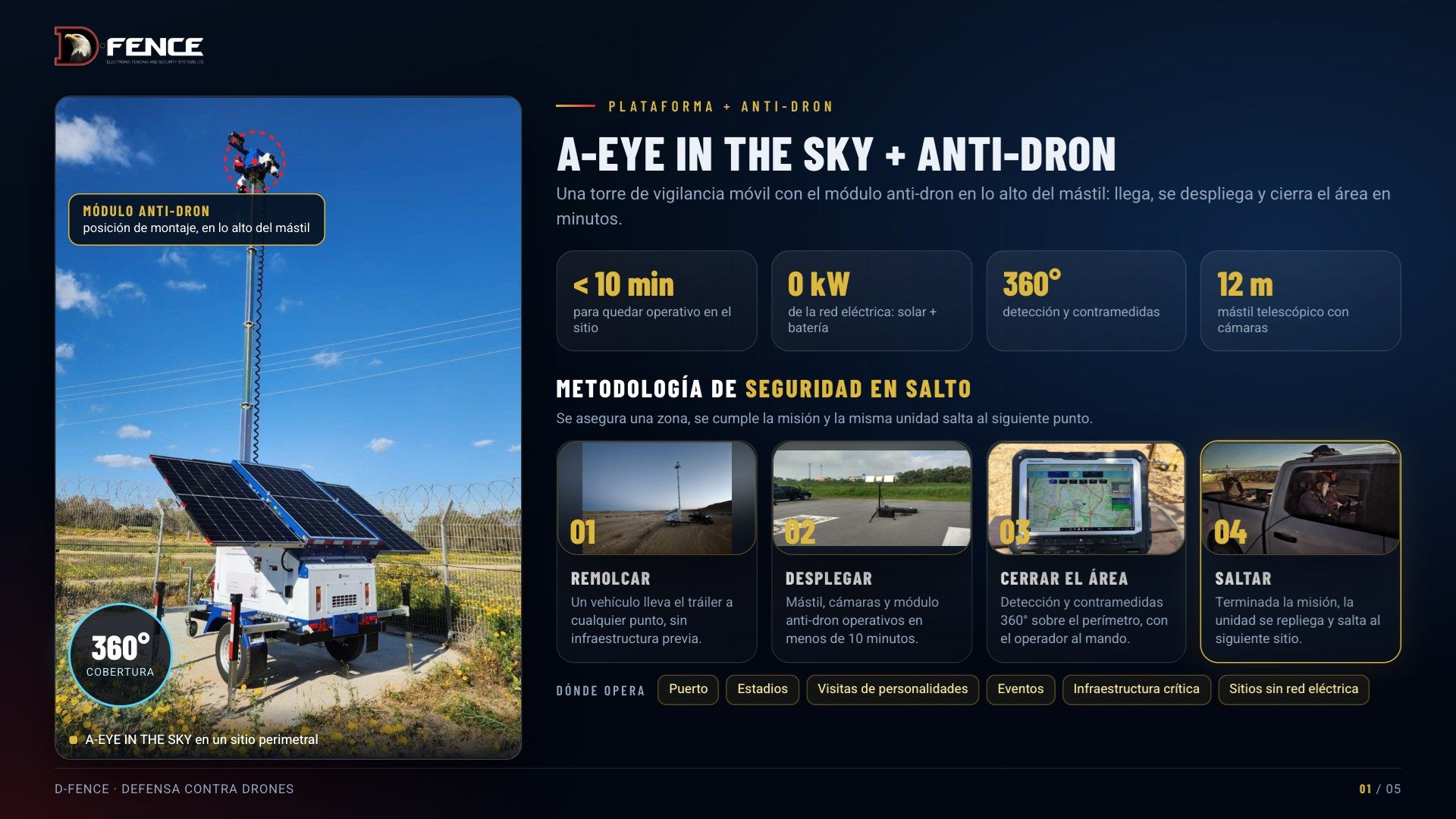
Drones over a site with no infrastructure?
A mobile surveillance tower with the anti-drone module at the top of the mast. It arrives, deploys and seals the area in minutes.
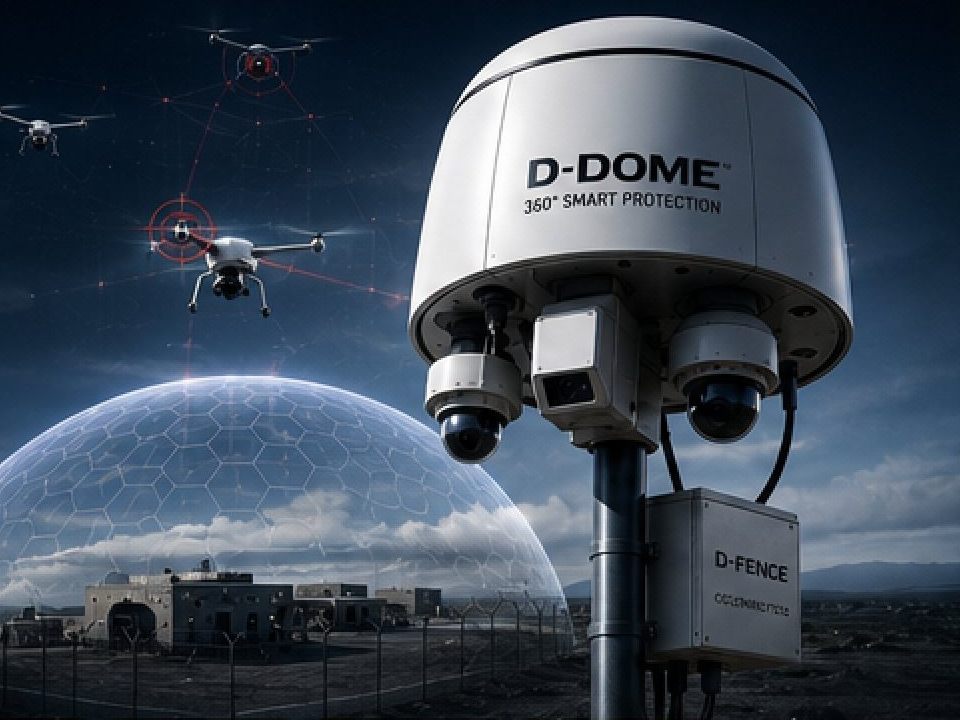
Drones overhead, or cameras being blinded?
Multi-sensor drone detection: radar, RF, Remote ID and EO/IR fused into one threat score, with early alerts to your control room.
Products, solutions and pages